Leather Grades
- Share
- Issue Time
- Apr 25,2018
Summary
Compare full-grain cowhide, calf leather and faux leather by durability, feel, appearance and suitability for custom belt manufacturing.
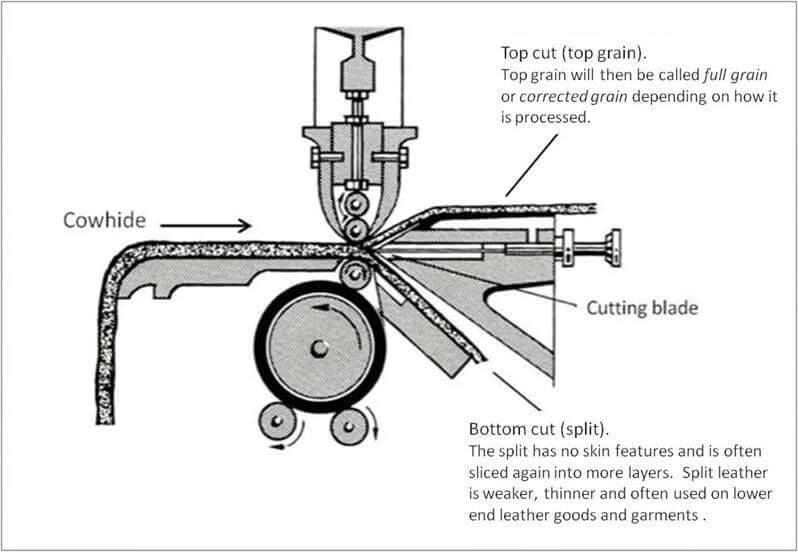
Understanding leather grades is essential for anyone who buys or sells leather belts, because the grade of the leather determines both the quality and the price of the final product. In this guide, we explain the main types of cowhide leather and how they compare. Full-grain leather retains the natural grain surface rather than being sanded to remove it. Its appearance can include natural variation. Buyers should specify the finish and compare the actual sample instead of assuming that the label alone establishes durability or a service life. Top-grain describes leather from the grain-side portion of the hide; the term is not a second-layer designation. Ask whether the surface is full-grain or has been corrected, and record the finish and construction of the proposed material. Split leather comes from a layer separated from the grain-side portion of the hide and may have a suede or coated finish. Bonded constructions use leather fibers with a binder and should be described separately. Request the layer composition and sample rather than assuming a fixed quality ranking or lifespan. Calf leather and PU are different material descriptions buyers may encounter. Ask for the actual composition, finish and backing. A PU label alone does not establish that every component is animal-free or that it will meet a particular target price. For a Hongmioo material inquiry, specify the desired leather or synthetic construction, finish, dimensions and quantity. Request available material samples and ask which documentation can be supplied for the exact proposed product.